
Project 1 - Children's Touring Theatre

For this project, the brief required a touring theatre set for a children's play, with a budget of £5000, a crew of no more than 3 and all set, costume and props had to fit inside a Transit van. The location was also given as Meller's School Hall.
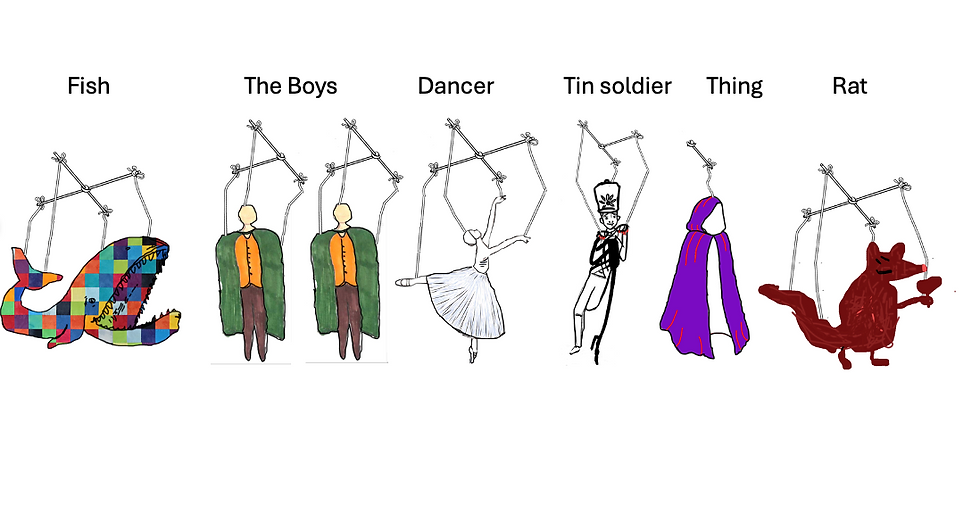
The story I chose was A Steadfast Tin Soldier slightly, I felt that having a smaller cast would make the costume changes and limited budget and space more achievable. I began by dissecting the story into different scenes/props/characters etc. Once this was done I could start pulling together reference images for the scenery and costumes.
In adapting The Steadfast Tin Soldier into a Cubist theme, I envisioned the characters and environments through fragmented forms and geometric abstraction. The tin soldier would be depicted as a series of sharp, angular shapes—rectangles, triangles, and straight lines—reflecting his rigid, metallic nature. His face could be shown from multiple perspectives simultaneously, one side in profile and the other frontal, a typical trait of Cubism. The ballerina, in contrast, could be broken into delicate, overlapping planes to capture her grace, while the Mouse King might be represented as a chaotic mass of jagged, sharp-edged forms to reflect his menacing presence.
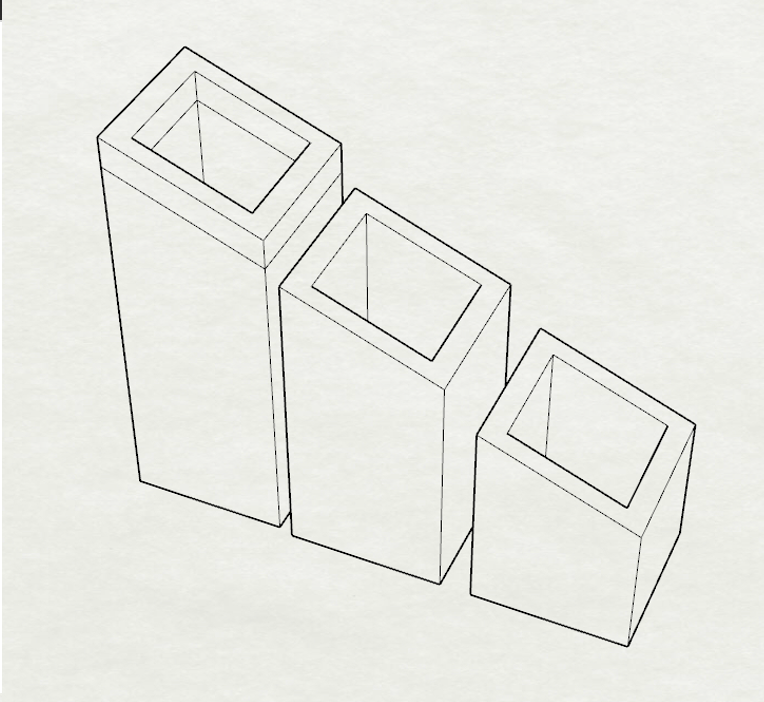
The settings would also be reimagined in a fragmented way. The toy shop could be transformed into a collection of distorted cubes and geometric planes, with windows, shelves, and doors all rendered from multiple angles within the same frame. Likewise, the river and the soldier’s perilous journey could be abstracted into swirling, sharp lines, conveying motion and the constant danger he faces. Key moments in the story would be shown in overlapping layers of geometric shapes, depicting the passage of time and the soldier’s undying perseverance in the face of adversity.
Color plays a crucial role in this Cubist take on the story. The soldier’s rigid, metallic body could be expressed through cool shades of gray, silver, and blue, while other characters might be painted in contrasting, vibrant hues to express their emotional qualities. For example, the ballerina could be rendered in soft pinks or pastels, standing in contrast to the darker, angular forms of the soldier and the Mouse King. Texture might also be incorporated, using rough brushstrokes or collage techniques to evoke the different materials in the story, such as tin or delicate fabric.
In terms of emotion, Cubism allows for expression through the deconstruction of form, rather than traditional facial expressions. The tin soldier’s resolve could be communicated with sharp, rigid lines, while his eventual disintegration would be depicted as his form breaking apart into smaller pieces. The nonlinear narrative structure of Cubism would work well with the story’s fragmented emotional journey, highlighting the soldier’s internal experience and steadfast determination. This adaptation creates a dynamic, layered version of the tale, where the soldier’s journey is both visually abstract and emotionally poignant.




Comments